
Retractable Bollard Installation in Toronto & The GTA
Retractable Bollard Systems
A steel bollard set in concrete at the end of your driveway means your car cannot be driven away, even by someone holding your keys. It drops flush into the ground when you need the space, and goes back up in seconds when you do not.
Most vehicles in the GTA are not stolen. They are driven away.
Very few vehicle thefts around Toronto involve hot-wiring. The car is taken with a relay device that copies the fob signal through your front wall, or with the keys themselves after someone has been inside the house. Either way the thief drives out of the driveway in under a minute.
A retractable bollard in your Toronto driveway removes that exit. The vehicle is physically blocked in. Holding the keys no longer gets anybody the car, and the quiet, fast theft they planned for turns into a problem they cannot solve in your driveway at two in the morning.
It also does work before anything happens. A bollard is visible from the street, which tells anyone scouting the block that this house takes longer than the next one.
- Blocks the vehicle in, even if the keys are taken
- Drops flush with the driveway when you need access
- Steel or stainless cylinder set in a concrete footing
- Manual, removable and automatic options
Three types, and how to pick one
which matters a lot more than people expect once it becomes a daily habit.
01:Retractable
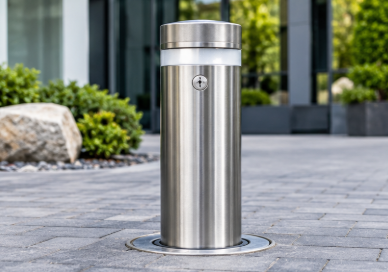
Unlock with a key and the cylinder slides down into its own sleeve, flush with the driveway. Nothing to carry and nothing to store. This is what most GTA homeowners end up choosing.
02: Removable
Unlock, lift the cylinder out of the ground socket, and drop a flush cover over the hole. Lower cost than retractable, but you need somewhere to keep the post and you have to lift it each time.
03: Automatic
Raises and lowers under power from a remote, keypad or phone. The convenient option for a driveway used several times a day, and the one that needs a power feed and more groundwork.
Comparing retractable, removable and automatic driveway bollard
| Feature | Retractable | Removable | Automatic |
|---|---|---|---|
| Day to day use | Key, then push down | Key, then lift out and store | Remote or keypad |
| When lowered | Flush with the driveway | Flush cover plate over the socket | Flush with the driveway |
| Power needed | No | No | Yes, a feed to the unit |
| Best for | Most homes, daily use without effort | Driveways that stay blocked most of the time | Busy driveways and gated entries |
What a Fort Knox bollard installation includes
The install is the part that matters
A bollard is only as strong as what is under it. The cylinder you see is the easy part. The footing holding it is what decides whether the unit shrugs off a vehicle pushing against it or tilts out of the ground.
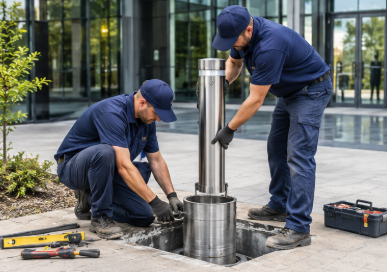
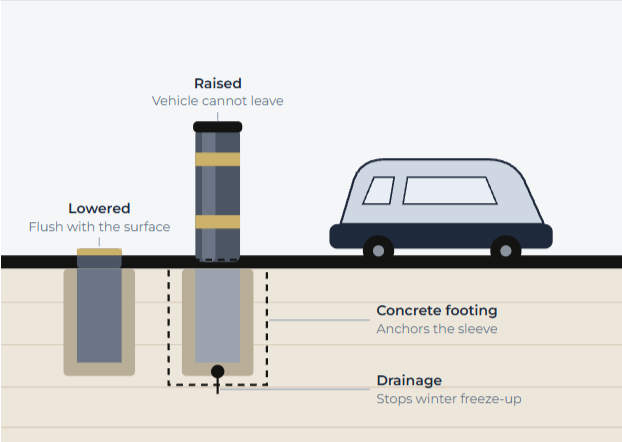
We cut the driveway surface, excavate for the sleeve, set it in a concrete footing sized for the unit, and build in drainage at the base so meltwater does not collect and freeze around the cylinder through a Toronto winter. The surface is then reinstated around the collar so the finish sits level and clean.
Every installation starts with a utility locate. Driveways run over gas, water and communications services more often than homeowners realise, and that check is not optional.
- Driveway measurement and placement planning so a car cannot be driven around the unit
- Property line check against the municipal boulevard or right of way
- Utility locate before any cutting or digging
- Clean surface cut and excavation
Where bollards go on a residential property
Placement is the difference between a bollard that works and one a thief simply steers around. We measure the driveway opening, the turning space and the position of the parked vehicle before deciding.
Single driveway
Usually one unit, set centrally in front of where the vehicle parks, close enough to the garage that there is no room to swing past it.
Double driveway
Typically two units, spaced so there is no gap wide enough to drive a car through or around on either side.
Garage door line
For properties where the vehicle lives in the garage, a unit on the apron stops anyone backing a stolen car out, and protects the door from being rammed.
Side and rear access
Laneway entries and rear parking pads are the openings people forget. If a vehicle can get in there, a unit belongs there too.
Our process, from free assessment to full protection
Every bollard project follows the same step-by-step approach we use for all our installations.
01
Free Consultation
We talk through the vehicles you are protecting, how often the driveway gets used, and whether there has been an attempt already.
02
On-Site Security Assessment
We measure the driveway, check the property line against the boulevard, and work out how many units and where.
03
Customized Security Plan
A written plan with the unit type, placement, surface reinstatement and an itemized quote, plus anything we would fix at the house itself.
04
Professional Installation
Utility locate, surface cut, footing, drainage and reinstatement, with the driveway left clean and level.
05
Final Inspection & Support
We check the action, hand over keys or remotes, explain curing time and winter care, and cover the warranty.
Why choose Fort Knox Solutions
We came at bollards from the house, not from the driveway, which changes how we plan them.
Local GTA specialists
Based in Concord and working across Toronto, Vaughan and the surrounding GTA every day.
Placement before product
We measure the driveway and the turning space first, because a well-made bollard in the wrong spot gets driven around.
Built for our winters
Drainage at the base of the sleeve and a flush top plate, so the unit still works in February and survives the plow.
The whole property, not one item
If the real risk is someone walking in through a patio door for the keys, we will tell you that during the assessment.
Clean reinstatement
Asphalt, concrete and paver surfaces put back properly around the collar, not patched and left.
Warranty-backed work
Products and installations come with warranties, and we are local if anything needs attention.
A bollard protects the car. These protect the house.
Many of the vehicle thefts we hear about started with someone getting into the house for the keys. If that is the risk you are worried about, the bollard is only half the answer:
SERVICE AREAS (Toronto, Vaughan & the GTA)
We install retractable driveway bollards in Toronto, Vaughan and surrounding areas, including:
If you’re searching for professional retractable driveway bollards in Toronto, Vaughan and surrounding areas, our team is ready to help.
Retractable bollard FAQs

What is the difference between retractable, removable and automatic bollards?
A retractable bollard drops down into its own ground sleeve and sits flush with the driveway when you need the space. A removable bollard is lifted out of a ground socket by hand and stored, leaving a flush cover plate. An automatic bollard raises and lowers under power, operated by a remote, keypad or app. Retractable is the most common choice for a GTA driveway because there is nothing to carry and nothing to lose.
Will a bollard stop my car being stolen if thieves get my keys?
That is the main reason homeowners in the GTA install them. Most vehicle thefts here are not hot-wired, the vehicle is driven away on a relay signal or on keys taken from inside the house. A raised bollard means the car physically cannot leave the driveway, so holding the keys no longer gets them the car.
Does a bollard also protect the house?
Not directly, and we will not claim otherwise. A bollard protects the vehicle and the driveway. It does help in one indirect way: a visible bollard tells someone scouting the street that this house is not the easy option. For protection at the house itself you need door reinforcement and glass protection, which is the rest of what we do.
Do retractable bollards work through a Toronto winter?
They do when they are installed properly. The sleeve needs drainage at the base so meltwater does not collect and freeze around the cylinder, and the top plate has to sit flush so a plow blade or shovel passes over it. Clearing snow off the cover before you lower the unit is the only habit you need to pick up.
Do I need a permit to install a bollard in my driveway?
On your own property, usually not. The part that needs care is the boulevard or city right of way, which often extends further up the driveway than people expect, and municipalities across the GTA treat it differently. We check the property line and your municipality’s rules before digging, and we arrange a utility locate on every installation.
How many bollards does my driveway need?
It depends on the width. A single-car driveway is often one unit placed centrally. A double driveway usually needs two, spaced so a vehicle cannot be driven around or between them. We measure the opening and the turning space during the assessment rather than quoting a number over the phone.
How long does installation take?
Most residential installations are completed in a day once the utility locate is cleared. The work involves cutting the driveway surface, excavating for the sleeve, setting the concrete footing with drainage, and reinstating the surface around the collar. Concrete needs curing time before the unit is put into regular use, and we tell you how long on the day.
How much do retractable bollards cost in Toronto?
Cost depends on the type of unit, the number required, the driveway surface we have to cut and reinstate, and whether you want manual or automatic operation. We give you an itemized quote after the free assessment, with supply, installation and reinstatement separated out.